Our Leeds office provides comprehensive geotechnical engineering solutions tailored to the region's unique ground conditions. From initial subsurface investigations and site characterization to foundation design, slope stability assessments, and construction monitoring, we deliver integrated solutions for residential, commercial, and infrastructure projects. We combine consolidated regional background with calibrated equipment and code-compliant reporting to ensure safe, economical, and durable foundations. Our team works closely with local contractors and authorities to navigate Leeds' specific challenges, including variable ground conditions and groundwater control. For a deeper understanding of our approach, explore our soil mechanics study and bearing capacity analysis pages.
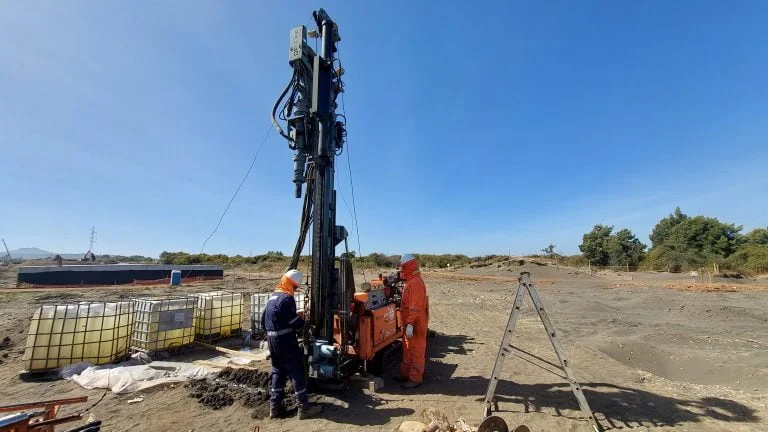
Scope of work in Leeds
Procedure video
Critical ground factors in Leeds
Our team brings decades of consolidated regional background in Leeds and West Yorkshire, having delivered hundreds of projects across varied ground conditions. We operate a UKAS-accredited laboratory with calibrated equipment for all standard and advanced soil tests, ensuring data quality and traceability. Every report is prepared by Chartered Geologists and Chartered Engineers, following UK standards and local authority requirements. We maintain strong relationships with local contractors, planning departments, and the Coal Authority to streamline project delivery and manage risks such as mining legacy and groundwater control.
This service complements our laboratory testing work for a complete project analysis.
Our services
FAQ
What are the typical ground conditions encountered in Leeds for foundation design?
Leeds foundations must contend with variable glacial till (boulder clay), which is stiff but can contain sand and gravel lenses. In valley areas, alluvial soft clays, silts, and peat are common, often with high groundwater. Historical coal mining beneath parts of the city also requires specialist assessment. A thorough site investigation is essential to determine bearing capacity and groundwater levels.
Do I need a geotechnical investigation for a small extension or basement in Leeds?
Yes, especially for basements or extensions in Leeds. The variable ground conditions, potential for shallow groundwater, and historical mining mean that a minimum of trial pits and soil testing is strongly recommended to avoid structural movement or water ingress. Local building control often requires a geotechnical report for basement projects.
What UK standards apply to geotechnical work in Leeds?
Geotechnical work in Leeds must comply with Eurocode 7 (BS EN 1997) for design, BS 5930 for site investigation, and BS 1377 for laboratory testing. For foundation design, BS 8004 is relevant, and for earthworks, BS 6031 applies. Transport projects follow the DMRB. All work must also satisfy the Building Regulations 2010 (Approved Document A).
How long does a typical geotechnical investigation take for a Leeds housing development?
For a typical housing development in Leeds, a phased investigation including trial pits, boreholes, and laboratory testing can take 2-4 weeks from mobilization to report delivery. The timeline depends on site size, access, and the complexity of ground conditions encountered. We always coordinate with the client and contractor to minimize delays.