Our equipment bay in Leeds holds rolls of woven and non-woven geotextiles from 100 g/m² to 800 g/m². We check each batch against the project's grading curves and pore size requirements. For road subgrades in the Aire Valley we often specify a 200 g/m² non-woven fabric to prevent intermixing. Before writing the specification we review the site's particle size distribution and compare it to the geotextile's characteristic opening size. This step is critical for filtration applications. We also assess the installation conditions — slope angle, cover depth, and potential for puncture. Our team has produced geotextile specification sheets for dozens of sites across Leeds, from residential developments in Headingley to commercial plots near the city centre.
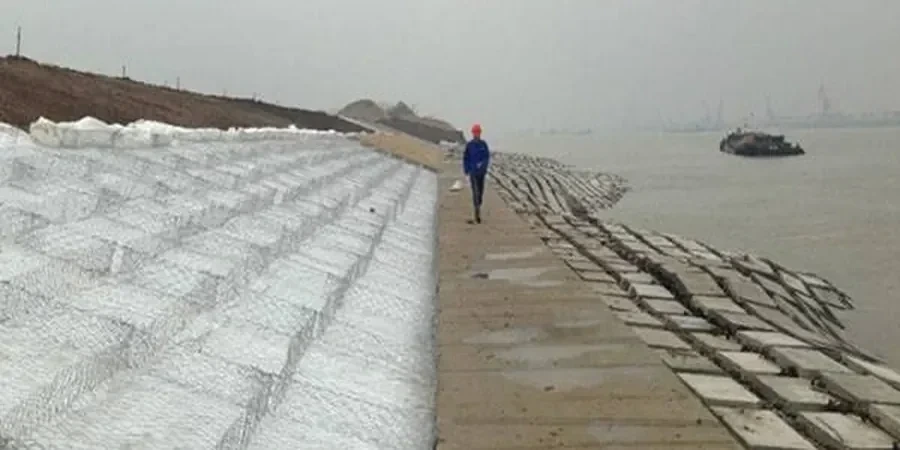
A geotextile specification must include the characteristic opening size, permittivity, and minimum tensile strength for the design life.
Scope of work in Leeds
Critical ground factors in Leeds
Leeds grew rapidly during the Industrial Revolution, with mills and factories built along the River Aire and its tributaries. Many of these sites now sit on soft alluvial deposits, variable fill, and old river channels. A poorly written geotextile specification can lead to clogging of the filter layer or rupture of the reinforcement under load. We have seen cases where a non-woven geotextile with an AOS of 0.2 mm was specified for a gap-graded sand — the result was severe blinding within six months. The specification must account for the actual soil conditions on site, not generic values from a handbook. Our background in Leeds tells us that the local glacial till and river terrace deposits demand careful selection of both fabric type and installation method.
This service complements our laboratory testing work for a complete project analysis.
Our services
We offer two tailored services for geotextile specification work in Leeds:
Technical Specification Writing
Our engineers produce a full geotextile specification document including material properties, installation criteria, and quality control checks. The document references the relevant British Standards and includes a schedule of tests for site acceptance.
Site-Specific Selection & Testing
We visit the site in Leeds to assess ground conditions, collect soil samples, and run index tests. Based on the results we recommend the correct geotextile grade, confirm its long-term performance, and issue a compliance statement for the design team.
FAQ
What British Standards apply to geotextile specification in the UK?
The main standards are BS EN 13249 for road construction, BS EN 13251 for retaining structures, and BS EN 13252 for drainage. Each part sets minimum performance requirements for tensile strength, puncture resistance, and hydraulic properties.
How much does a geotextile specification service cost in Leeds?
The typical cost for a site-specific geotextile specification in Leeds ranges from £310 to £1,030, depending on the number of test points and the complexity of the ground conditions. A full report with index testing sits at the higher end of that range.
Can the same geotextile specification be used for separation and filtration?
Not usually. A separation layer needs a fabric with sufficient tensile strength to resist construction loads, while a filtration layer requires a specific AOS and permittivity. We always tailor the specification to the primary function, even if the same roll is used for both purposes.
Do you include installation supervision in the specification service?
Yes, we offer optional site visits during installation to verify overlap widths, cover depths, and jointing methods. This ensures the geotextile performs as specified and helps avoid costly claims later in the project.