We run field permeability tests in Leeds using a double-packer system lowered into a borehole. The setup isolates a specific test section, then we inject water at constant pressure or constant head. For the Lefranc method we use a low constant head, typical for soils and weak rock. The Lugeon test applies stepped pressures up to 10 bar, designed for fractured rock masses. Leeds sits on Millstone Grit and Coal Measures, where bedding planes and joints control permeability. Before testing, we review borehole logs to select the test interval. We also check if the ground requires a complementary permeability test in the lab for fine-grained samples. The field test gives direct in-situ values, not lab-derived estimates.
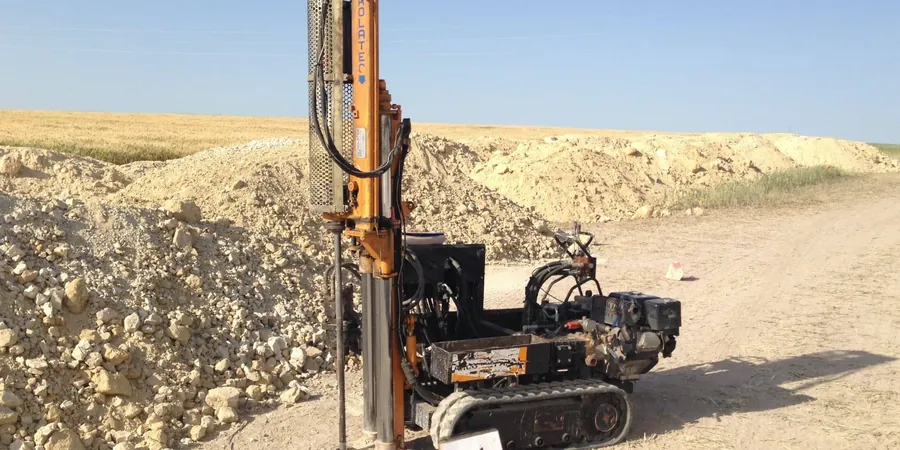
Millstone Grit can show a tenfold difference in permeability between intact rock and open joints — the Lugeon test captures that contrast.
Scope of work in Leeds
Critical ground factors in Leeds
Leeds lies within a former coalfield where abandoned mine workings are common. Old shafts and adits can act as preferential flow paths, drawing surface water deep underground. A field permeability test in Leeds is essential to identify these features before excavation. The city also has areas of made ground — old industrial fill — which can be highly permeable and unpredictable. Without In-Situ, designers risk underestimating groundwater ingress into basements or cuttings. We have tested sites in Holbeck, Kirkstall, and the South Bank regeneration zone. The data directly informs dewatering design and waterproofing specifications.
This service complements our laboratory testing work for a complete project analysis.
Our services
We offer a complete range of in-situ permeability testing solutions across Leeds and West Yorkshire.
Lefranc Permeability Test (Constant Head)
For soils and weak rock. We maintain a constant water level in the borehole and measure inflow rate. Suitable for glacial till, alluvium, and weathered Coal Measures.
Lugeon Packer Test (Step Pressure)
For fractured rock. We inflate a pneumatic packer, then apply five pressure steps. Results are expressed as Lugeon units. Ideal for Millstone Grit and sandstone.
Falling Head Test in Standpipes
For shallow groundwater monitoring. We install a standpipe, fill it, then record the rate of fall. Quick, low-cost estimate of horizontal permeability in soils.
Single- and Double-Packer Systems
We deploy single packers for long test sections or double packers to isolate specific depths. Custom lengths available for deep boreholes up to 50 m.
FAQ
What is the difference between the Lefranc and Lugeon tests?
The Lefranc test uses a constant low head (under 2 m) and is best for soils and weak rock where flow is laminar. The Lugeon test applies stepped pressures up to 10 bar, designed for fractured rock. It reveals turbulent flow, dilation, or if the rock is hydraulically fractured. In Leeds, we use Lugeon for Millstone Grit and Lefranc for glacial till and alluvium.
How much does a field permeability test cost in Leeds?
A single Lefranc test in a shallow borehole typically costs between £510 and £840, depending on depth and access. Lugeon tests with multiple pressure steps are priced per test section. Call us for a project-specific quote.
When should I use a field permeability test instead of a lab test?
Use the field test when you need in-situ values for fractured rock, coarse gravels, or made ground. Lab tests on small samples cannot capture joints, bedding planes, or old mine workings. Field tests are essential for dewatering design, grouting verification, and assessing groundwater flow into excavations.
What is a Lugeon unit and how is it calculated?
A Lugeon unit (Lu) equals 1 litre of water per metre of test section per minute at a pressure of 10 bar. In practice, we measure flow at each pressure step and normalise to 10 bar. Typical values: intact rock <1 Lu, moderately jointed rock 3–10 Lu, open fractures >20 Lu. Values above 10 Lu usually require grouting treatment.