By BS 5930 and Eurocode 7 (EN 1997-1:2004), we determine liquid limit, plastic limit, and plasticity index for cohesive soils in Leeds. The region's glacial till and alluvial clays from the River Aire often exhibit high plasticity, making these limits essential for foundation design and slope stability in areas like Headingley or the city centre. In our lab, we follow the Casagrande cup method and the rolling-thread technique to produce consistent, audited results. For road projects near the M621, we combine these with permeability testing to assess drainage behaviour under wet conditions. Every test is recorded with moisture content to 0.1% precision, ensuring repeatability.
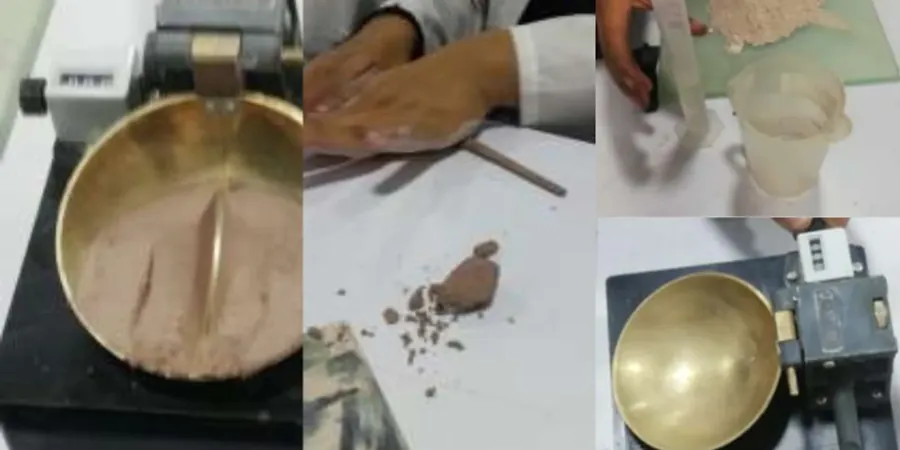
In Leeds, the plasticity index of glacial till typically ranges 15-30, while alluvial clays can exceed 40 — a critical difference for foundation design.
Scope of work in Leeds
Critical ground factors in Leeds
What we see often in Leeds is that developers underestimate the shrink-swell potential of the local clays, especially on south-facing slopes where seasonal drying is more severe. Without proper Atterberg limits data, a building on clay in areas like Kirkstall can suffer differential movement within a few years. The plasticity index directly relates to volume change risk — the higher the PI, the greater the need for deeper foundations or Improvement. In our background, a PI above 35 in Leeds signals high-volume-change clay that requires a reinforced raft or piles. Ignoring this leads to cracks in finishes and structural elements.
This service complements our laboratory testing work for a complete project analysis.
Our services
Our Leeds-based lab offers a full suite of soil plasticity and classification solutions tailored to the region's geology.
Liquid & Plastic Limit Testing
Cone penetrometer and rolling-thread methods per BS 1377:1990. Results include LL, PL, and PI with moisture content precision to 0.1%. Typical turnaround 3-5 working days.
Plasticity Index Classification
A-line chart classification for cohesive soils. We correlate PI with volume change potential for foundation design in Leeds clay formations.
Linear Shrinkage Test
Measures shrinkage limit and potential cracking in clays. Essential for embankments and shallow foundations in areas with high seasonal moisture variation.
FAQ
What are Atterberg limits used for in Leeds?
They classify fine-grained soils by plasticity — essential for foundation design on clay, slope stability analysis, and predicting shrink-swell behaviour in Leeds' glacial and alluvial deposits.
How much does Atterberg limits testing cost in Leeds?
A standard suite (liquid limit, plastic limit, plasticity index) ranges between £50 and £80 per sample. Volume discounts apply for multiple samples from the same site.
What is the difference between liquid limit and plastic limit?
Liquid limit is the moisture content at which soil starts to flow as a liquid; plastic limit is the point where it crumbles when rolled into a 3 mm thread. The difference (PI) measures the range where soil behaves plastically.
How long does the test take?
We usually complete liquid and plastic limit tests within 3-5 working days. Rush orders can be done in 48 hours for a small surcharge.
Do you test for linear shrinkage as well?
Yes, we offer linear shrinkage testing alongside Atterberg limits. It measures how much a clay sample contracts when dried, which is critical for slab-on-grade foundations in Leeds.