A common mistake construction firms make in Leeds is assuming uniform ground conditions across the city. The geology here shifts dramatically from the Millstone Grit of the north to the Coal Measures and glacial till in the south, meaning differential settlement is a real risk. Without a proper differential settlement analysis, even a well-designed foundation can crack or tilt as different layers compress at different rates. Before pouring concrete, a thorough geotechnical evaluation should include a permeability test and a full soil classification to identify how each stratum behaves under load.
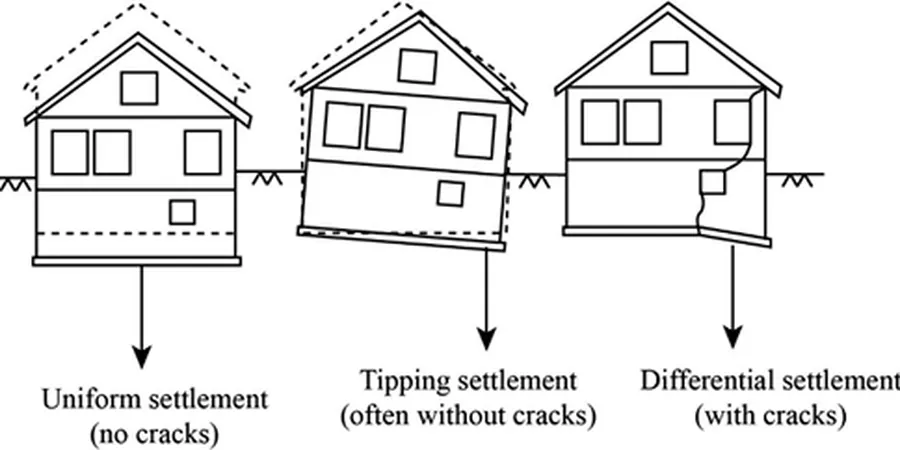
In Leeds, ignoring the variability of glacial till and Coal Measures can lead to differential settlements exceeding 25 mm within the first year of loading.
Scope of work in Leeds
- Compressibility index (Cc) from oedometer tests per BS 1377
- Pre-consolidation pressure to distinguish overconsolidated from normally consolidated clay
- Modulus of subgrade reaction for raft foundation design
- Time-rate of consolidation to predict settlement progression over 5 to 10 years
Critical ground factors in Leeds
Leeds sits on a complex mix of glacial till, alluvial deposits along the River Aire, and weathered Coal Measures bedrock. The water table varies from 1.5 m in the Holbeck area to over 8 m in the higher ground near Headingley. When a building loads these variable layers, the softer zones compress more than the stiff till, causing angular distortion. If the differential settlement exceeds 1/500, cracking in masonry and cladding becomes inevitable. A proper differential settlement analysis quantifies these risks before construction starts, avoiding costly remedial grouting or underpinning later.
This service complements our laboratory testing work for a complete project analysis.
Our services
We offer three complementary solutions to support differential settlement analysis in Leeds, each tailored to the city's specific ground conditions.
Oedometer Testing
Laboratory consolidation tests on undisturbed samples from boreholes across Leeds. Determines compression and swelling indices, pre-consolidation pressure, and coefficient of consolidation to predict long-term settlement under structural loads.
Plate Load Testing
Settlement Monitoring & Analysis
Installation of precise levelling points and settlement gauges on existing or new structures in Leeds. Data collected over 6–18 months to calibrate settlement models and confirm performance within Eurocode 7 limits.
FAQ
What causes differential settlement in Leeds specifically?
The main cause is the variability of glacial till and alluvial deposits across the city. Thicker soft zones near the River Aire compress more than the stiff till on higher ground, creating uneven foundation movement under load.
How is differential settlement measured during a geotechnical investigation?
We use borehole sampling for oedometer tests, plate load tests for immediate settlement, and precise levelling surveys. These methods quantify compression indices and modulus values to predict differential movement.
What are acceptable differential settlement limits for buildings in Leeds?
Eurocode 7 recommends a limit of 1/500 for angular distortion in masonry structures, which typically corresponds to 10–25 mm depending on span length. For sensitive cladding, tighter limits may apply.
How much does a differential settlement analysis cost?
A typical analysis in Leeds ranges from £520 to £1,410 depending on the number of boreholes, laboratory tests, and monitoring duration. Final cost varies with site complexity and access.
Can differential settlement be corrected after construction?
Yes, but it is expensive. Options include underpinning, compensation grouting, or installing settlement joints. Prevention through a pre-construction analysis is far more cost-effective and structurally sound.