A seven-storey residential block near Leeds city centre recently required driven pile design because the underlying glacial till and sandstone bedrock sit at variable depths. We analysed the shaft and base resistance using CPT correlations and dynamic load tests to confirm geotechnical capacity. For sites like this one, where the Coal Measures sequence can include weak mudstone bands, the driven pile design must account for both end-bearing in the sandstone and friction in the overlying till. That is why we always cross-check our calculations with site-specific soil parameters from the study of soil mechanics to validate the design assumptions before any foundation work begins.
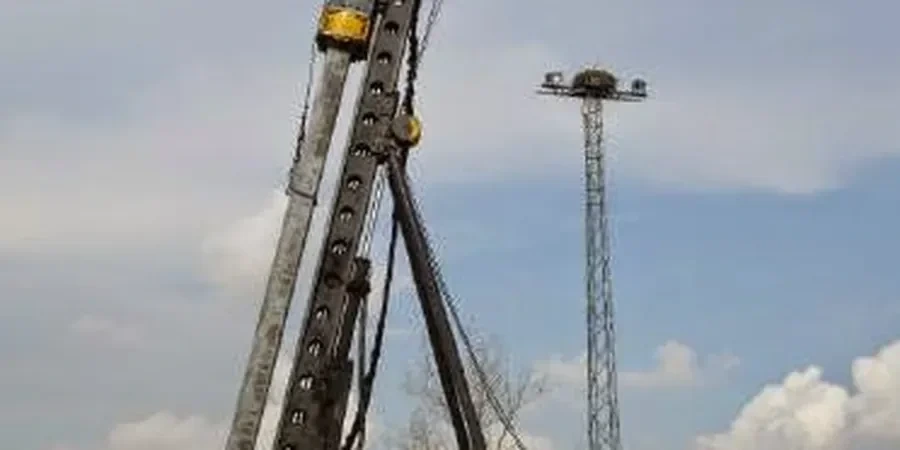
In Leeds, driven pile design must reconcile variable Coal Measures bedrock with high groundwater — effective stress analysis is non-negotiable.
Scope of work in Leeds
Critical ground factors in Leeds
One of the main risks when designing driven piles in Leeds is the presence of abandoned mine workings from the region's coal mining history. Shallow workings at 10–25 m depth can cause a pile to punch through a thin roof into a void, losing all end-bearing capacity. We mitigate this by reviewing Coal Authority records and performing probe drilling ahead of the pile toe. Another risk comes from the laminated nature of the glacial till, which can lead to rapid pore pressure build-up during driving, reducing effective stress and causing the pile to refuse prematurely.
This service complements our laboratory testing work for a complete project analysis.
Our services
We supply a complete driven pile design package for Leeds projects, from initial feasibility through to construction-phase load testing.
Geotechnical capacity analysis
Calculation of ultimate shaft friction and end-bearing using CPT direct methods (LCPC, UWA-05) and SPT correlation, with partial factors per EC7 Design Approach 1. Includes driveability assessment using wave equation analysis (GRLWEAP).
Dynamic load testing (PDA)
High-strain dynamic monitoring during driving to verify geotechnical capacity and driving stresses. We use Pile Driving Analyzer equipment and CAPWAP signal matching to back-analyse soil resistance distribution.
Pile group settlement analysis
Interaction factor method to estimate total and differential settlement for pile groups under vertical and lateral loads. Considers soil stiffness degradation with strain level and group efficiency factors.
Watch how it works
FAQ
What is the typical cost range for driven pile design in Leeds?
The cost for a full driven pile design report in Leeds typically ranges between £900 and £2,980, depending on the number of pile locations, the level of load testing required, and the complexity of the ground model. This includes capacity calculations, driveability analysis, and a design summary compliant with Eurocode 7.
Which soil conditions in Leeds make driven piles challenging?
The glacial till in Leeds can contain cobbles and boulders that cause pile damage or refusal, while the underlying Coal Measures may include weak mudstone or voids from old mine workings. We address these by specifying heavier hammer energy and performing probe drilling ahead of the pile toe in areas with known mining risk.
How does groundwater affect driven pile design in Leeds?
High groundwater in the Aire valley reduces effective stress in the soil, lowering shaft friction during driving and post-installation. We account for this by using effective stress analysis with drained strength parameters and by specifying a minimum pile embedment below the water table to mobilise end-bearing in the sandstone.
What load testing is required for driven piles under Eurocode 7?
For Leeds projects we typically recommend static maintained load tests (MLT) to failure on at least 1% of working piles, plus dynamic load testing (PDA) on 5–10% of the pile population. The static tests verify the design capacity, while PDA provides a cost-effective way to check consistency across the group.