Leeds sits on a thick sequence of glacial till, commonly known as boulder clay, which can vary from stiff to very stiff but often contains lenses of sand and gravel. Groundwater levels in the Aire Valley are shallow, sometimes within 1.5 m of formation level, so drainage is a critical input for any road subgrade design. We have assessed subgrade conditions on over forty highway and industrial access projects in Leeds, ranging from distributor roads to HGV yards. The local till typically yields CBR values between 3 % and 7 % at optimum moisture, but variability across short distances means that a single spot test is not enough. Before setting the pavement thickness, we always run a phased investigation that includes permeability testing in the field to verify drainage assumptions where groundwater is high.
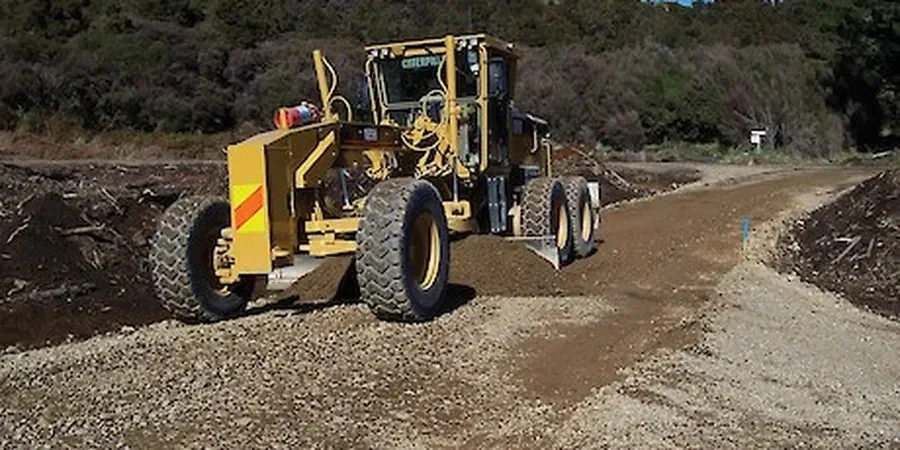
Leeds glacial till can lose half its CBR value if the water table rises by only 0.5 m: drainage design is non-negotiable.
Scope of work in Leeds
Critical ground factors in Leeds
The most common mistake we see in Leeds is assuming that the stiff glacial till will perform the same across an entire site. A contractor once placed 400 mm of capping based on one CBR test near the entrance, only to find a soft clay lens 30 m in where the CBR dropped to 1.5 %. That section had to be excavated and replaced at a cost of over £15,000. Without a spaced pattern of test pits and in-situ plate tests, the variability of Leeds till remains hidden until the pavement cracks or the surface ravels. We always recommend a minimum of one test location per 500 m² of carriageway.
This service complements our laboratory testing work for a complete project analysis.
Our services
We offer two complementary solutions that cover the full scope of road subgrade design in Leeds.
Subgrade investigation and CBR assessment
Trial pits, plate bearing tests, and laboratory CBR on undisturbed and recompacted samples. The output is a k-value and CBR profile for each pavement layer, referenced to DMRB CD 225.
Subgrade improvement design
Where the natural till is too weak or variable, we design capping layers, geotextile separation, or lime stabilisation to reach the target CBR of 5 % or higher.
FAQ
How many CBR tests are needed for a typical Leeds road scheme?
For a 200 m stretch of single carriageway we recommend at least four in-situ plate tests and two laboratory CBRs. The spacing has to account for the natural variability of the glacial till, which can change significantly within 50 m.
What CBR value is considered acceptable for a pavement subgrade in Leeds?
Most Leeds highway authorities require a design CBR of at least 5 % at formation level. If the in-situ value is lower, we design a capping layer of 150 mm to 300 mm of granular material to bring the effective support up to that threshold.
How much does a road subgrade design study cost in Leeds?
A full investigation including trial pits, plate tests, and laboratory CBR typically ranges from £890 to £2.440 depending on the number of test locations and the depth of the glacial till profile. The exact cost is confirmed after the initial site visit.
Does the high groundwater in the Aire Valley affect the subgrade design?
Yes. Shallow groundwater reduces the effective stress and can lower the CBR by 40 % or more. Our designs always include a drainage layer and, where necessary, a positive sub-base drainage system to keep the formation dry during the pavement life.